What Can We Learn From Fossils Lesson 2 Review
Summary
Students learn near fossils—what they are, how they are formed, and why scientists and engineers care nearly them.This engineering curriculum aligns to Adjacent Generation Science Standards (NGSS).
Engineering Connexion
Some engineers report fossils to larn most the prehistoric processes and functions that were present in the World'due south history. Past agreement how prehistoric creatures lived and became extinct, engineers acquire new ideas for how to design ways to study global climate change and species extinction. Engineers besides design the high-tech instrumentation that helps paleontologists discover fossils, peculiarly at the microbial level; these technologies include MRIs, Cat scans and mass spectrometry (or spectroscopy). Engineers are integral to the development of electric current technologies that use fossils (and fossil fuels) for materials and energy production.
Learning Objectives
After this lesson, students should be able to:
- Define fossil.
- Describe how fossils are formed.
- Explain why engineers might study fossils.
Educational Standards Each TeachEngineering lesson or activity is correlated to ane or more than Yard-12 science, technology, engineering or math (Stalk) educational standards.
All 100,000+ G-12 STEM standards covered in TeachEngineering are collected, maintained and packaged by the Accomplishment Standards Network (ASN), a project of D2L (www.achievementstandards.org).
In the ASN, standards are hierarchically structured: first by source; e.1000., past country; within source by type; eastward.yard., scientific discipline or mathematics; within type by subtype, and then by grade, etc.
Each TeachEngineering lesson or activity is correlated to ane or more than Yard-12 science, technology, engineering or math (Stalk) educational standards.
All 100,000+ G-12 STEM standards covered in TeachEngineering are collected, maintained and packaged by the Accomplishment Standards Network (ASN), a project of D2L (www.achievementstandards.org).
In the ASN, standards are hierarchically structured: first by source; e.1000., past country; within source by type; eastward.yard., scientific discipline or mathematics; within type by subtype, and then by grade, etc.
NGSS: Next Generation Science Standards - Scientific discipline
| NGSS Functioning Expectation | ||
|---|---|---|
| MS-ESS1-4. Construct a scientific explanation based on bear witness from rock strata for how the geologic time scale is used to organize Globe's 4.six-billion-year-old history. (Grades half dozen - 8) Do you lot concur with this alignment? Thanks for your feedback! | ||
| Click to view other curriculum aligned to this Performance Expectation | ||
| This lesson focuses on the following Three Dimensional Learning aspects of NGSS: | ||
| Science & Engineering Practices | Disciplinary Core Ideas | Crosscutting Concepts |
| Construct a scientific caption based on valid and reliable evidence obtained from sources (including the students' ain experiments) and the assumption that theories and laws that describe the natural world operate today equally they did in the past and will go on to do so in the hereafter. Alignment agreement: Thanks for your feedback! | The geologic fourth dimension scale interpreted from rock strata provides a mode to organize World's history. Analyses of rock strata and the fossil record provide simply relative dates, not an absolute calibration. Alignment understanding: Thanks for your feedback! | Time, space, and free energy phenomena can be observed at various scales using models to study systems that are too large or too small-scale. Alignment agreement: Thank you for your feedback! |
International Technology and Technology Educators Association - Technology
- New products and systems tin can be developed to solve issues or to aid do things that could not exist done without the help of engineering. (Grades 6 - viii) More than Details
View aligned curriculum
Practise yous concord with this alignment? Thanks for your feedback!
State Standards
Suggest an alignment non listed in a higher placeSubscribe
Get the inside scoop on all things TeachEngineering such as new site features, curriculum updates, video releases, and more past signing up for our newsletter!
PS: We do not share personal information or emails with anyone.
More than Curriculum Like This
Middle School Action 
Fossil Fondue
To sympathize how fossils are formed, students model the process of fossilization by making fossils using modest toy figures and melted chocolate. They extend their knowledge to the many ways that engineers aid in the study of fossils, including the evolution of tools and technologies for determini...

Middle School Lesson
Carbon Cycles
Students are introduced to the concept of free energy cycles by learning near the carbon cycle. They acquire how carbon atoms travel through the geological (ancient) carbon bike and the biological/concrete carbon wheel.

Upper Elementary Lesson
Harvesting Oil from the World
Students investigate sources of fossil fuels, particularly oil. Through two associated activities, they work with a model of the World to learn how engineers and scientists wait for oil by taking core samples, and they explore and analyze oil consumption and production in the U.S. and effectually the wor...

Introduction/Motivation
Today we're going to learn about some extremely old stuff—fossils! What are fossils? How are they formed? Why do scientists and engineers care almost them? Let'southward get-go off with the definition of a fossil: Tin can anyone explain what a fossil is? A fossil is a remainder of something that lived a long time ago, such as an aboriginal plant or animal. Most fossils really come from species that are now extinct.
Fossils help us learn almost how the World, plants, and animals have changed over fourth dimension. They too help us better understand the history of the Globe. Paleontologists (scientists who study fossils) tin can identify a time flow for a certain fossil considering the oldest fossils are the deepest buried. This makes sense considering fossils are formed when soil covers a dead organism, and the hardest parts of the organism leave an imprint in the soil. So, over fourth dimension, the soil covers more and more than organisms, piling on top of the older fossils.
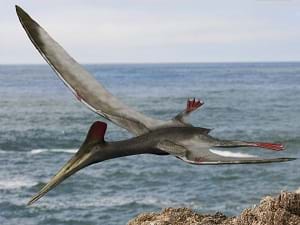
How is engineering related to fossils? Engineers are always trying to get new ideas and be inspired by things. Past studying fossils, they tin better understand how the prehistoric globe worked, and find out details near specific processes. For example, studying pterodactyl basic can help a paleontologist understand exactly how the pterodactyl was able to wing. Engineers tin compare and dissimilarity the pterodactyl flight process to other flying methods. They might enquire questions such as: Is there annihilation unlike and beneficial that the flight process includes? Is the pterodactyl flying process more efficient than other flight processes in any way? Is there anything in the pterodactyl flight process that we should avoid? How successful was the pterodactyl flight process? Engineers ask these types of questions to better designs for electric current technologies. When engineers apply processes from nature to meliorate a mod technological process or object, we telephone call it biomimicry.
Engineers design the tools that help find fossils. Paleontologists once only used hand picks and magnifying spectacles to locate fossils. Now they use advanced tools such as magnetic resonance imaging, computer-assisted tomography, and mass spectrometry. Engineers besides are involved in the blueprint of technologies that create iii-dimensional images of whole organisms from the ii- dimensional imprints of fossils. To animate these new 3D images, they report the parts of the organism to discovery how the organism may accept moved. Too, the instrumentation used to create chemic models of organisms from fossils is developed by engineers. Chemical assay of fossils tin can help united states of america larn more virtually the surroundings in which the organism lived, the diseases during that time, and what the organism used for food. Lastly, engineers can also use fossils and fossil fuels to create materials and energy that we use every day.
Lesson Background and Concepts for Teachers
What is a fossil?
A fossil is a remainder of something that lived a very, very long time agone. It can be the image of a plant, animal or even merely the trace of an brute, such as its dung or tracks. Refer to the Fossil Fondue activity to have students learn more nearly how fossils are created by forming their own using pocket-sized toy figures and melted chocolate.
How are fossils formed?
Animal fossils are formed when an animate being dies and slowly becomes covered with soil, mud or silt. Over thousands and thousands of years, the animal decomposes and the difficult parts of the body get replaced with minerals; this process is chosen permineralization.
Fossils are often plant in sedimentary rock, which is formed by the layering of cloth over many years. When plants and animals dice, they often sink to the bottom of a river or lake, where they are eventually covered over with soil and/or rock particles. Over time these soil and rock layers slowly become pressed together into difficult rock, trapping the plant or animate being remains between the layers, every bit fossils.
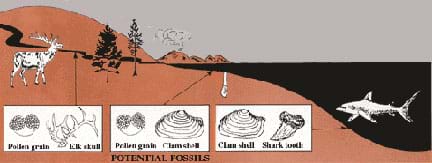
Because sedimentary rocks form in layers, scientists believe that fossils also grade in layers from the oldest fossil to the youngest fossils. And so, the fossils at the bottom of a deep layer of rock are most likely the oldest; the fossils toward the top of a rock are most likely the youngest. Scientists call this the "Police of Superposition."
Just as information technology makes sense that the fossils at the bottom of a rock would exist the oldest, it likewise makes sense that the sediment that covers upwards organisms (that afterward become fossils) would be laid down in horizontal layers. This is called the "law of original horizontality." But, we know that over time, these horizontal layers can shift. Sometimes, sedimentary stone layers are not horizontal, but have been moved or shifted due to some modify in the Earth.
How do fossils help united states learn about the history of the Earth?
Scientists describe the Earth'due south long history in fourth dimension periods that compose a geologic time scale. Time periods are cleaved up into eons, which are farther divided into eras, which are then divided into periods, which are so divided into epochs.
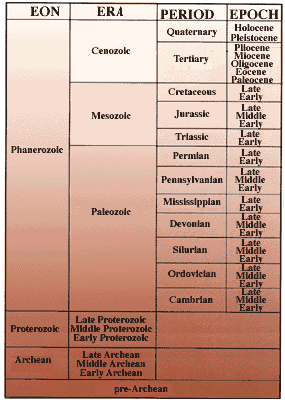
Engineers report fossils from all over the geologic time calibration. They look closely at the processes and functions that are found in prehistoric nature and use them to current technologies. By understanding how prehistoric creatures lived and what caused them to become extinct, engineers can become new ideas for how to blueprint something. Engineers tin can besides use this data to create models of global climatic change over the life of the World, too equally learn more nigh species extinction.
Engineering Tools
Engineers blueprint the tools that paleontologists employ to discover fossils. Examples include:
- Magnetic resonance imaging (MRI): A noninvasive diagnostic technique that produces computerized images of internal body tissues and is based on nuclear magnetic resonance of atoms within the body induced by the application of radio waves.
- Reckoner-assisted tomography (CAT browse): A medical imaging method in which digital geometry processing generates a 3D image of the internals of an object from a large series of 2D x-ray images taken around a unmarried axis of rotation; used in many fields for nondestructive materials testing, including detecting cracks in aircraft skins, industrial pipes, hole-and-corner pipes, corroded reinforcing steel inside concrete, leaking welds, finding broken wires in suspension bridges, and forensics, etc.
- Mass spectrometry (or spectroscopy): An instrumental method for identifying the chemical constitution of a substance by means of the separation of gaseous ions according to their differing mass and charge, for identifying unknown compounds to determine physical, chemical or biological properties of compounds.
Associated Activities
- Fossil Fondue - Students learn more about how fossils are created by forming their own using small toy figures and melted chocolate. With this investigation, they relate how engineers assistance develop technologies to study the physical and chemical properties of fossilized organisms and increment their cognition of changing globe.
Lookout man this activity on YouTube
Lesson Closure
Who tin tell me: What is a fossil? A fossil is a remainder of an organism that has been preserved in the Earth. What are dissimilar types of fossils? Fossils tin be from a found or animal, and they can even exist footprints or droppings. Remember that fossils are formed when an organism dies and is covered in soil, fossilizing the hard parts of the remains. Recall that engineers design creative tools to help the states find fossils. They as well written report fossils to get new ideas. They design technologies to assist create concrete and chemical images of fossilized organisms. This helps u.s. learn about the physical structure of the organism, the surroundings that it lived in, the diseases that affected it, and what it used for nutrient. Engineers likewise use fossils and fossil fuels to create materials and free energy that nosotros use every day. So, side by side time you look at a fossil, recollect well-nigh whether there is whatsoever style you lot tin can apply what you observed to a current technology!
Vocabulary/Definitions
biomimicry: Copying or imitating the special characteristics of naturally existing things (animals, plants, etc.) in human-made designs, products and systems. From bios, pregnant life; and mimesis, significant to imitate.
body fossil: A fossil of an organism'south trunk.
chemical fossil: Likewise called biomarkers – a chemic trace of an organism.
engineer: A person who applies his/her understanding of science and math to creating things for the benefit of humanity and our globe.
extinct: No longer existing.
fossil: A residual of an organism that has been preserved in the Globe'due south chaff.
geologic time scale : A scientific method for classifying historical fourth dimension periods.
macrofossil: A larger fossil specimen, one large enough to be observed by direct inspection.
microfossil: A fossil that can exist studied only microscopically, and that may exist either a fragment of a larger organism or an entire tiny organism.
paleontologist: A person who studies fossils.
paleontology: The study of fossils.
permineralization: The procedure whereby groundwater permeates an organism and minerals from the groundwater precipitate out and make full the empty spaces in the body, thus forming a torso fossil.
trace fossil: A fossil that shows the activity of an animal or plant simply is non formed from the organism itself. A trace fossil shows that an organism was present. Examples: burrows, trails, footprints or droppings.
Assessment
Pre-Lesson Cess
Discussion Question: Ask students the following question and discuss as a class. First meet if students tin provide a definition before explaining it to them.
- What is a fossil? (Reply: A remainder of something that lived a long time ago, such every bit a prehistoric plant or animal.)
Post-Introduction Assessment
Class Vote: Ask several true/fake questions almost the lesson textile and take students vote past holding thumbs upwardly for truthful and thumbs downward for false. Tally the votes and write the totals on the board. Give the right respond. Example questions:
- True or Simulated: A piece of creature droppings (poop) can be a fossil. (Respond: True. This type of fossil is called a trace fossil because it shows that an organism was there.)
- True or False: Fossils are formed when people place them into sand for other people to find later. (Answer: Faux. Fossils are formed by sedimentary stone being formed on top of and around a dead organism.)
- True or False: Paleontology is the written report of fossils. (Reply: True)
- True or False: Engineers accept no use for studying fossils. (Answer: Fake. Engineers can get ideas from studying fossils. They can use what they learn about fossils to design new technologies that mimic the prehistoric natural world.)
Lesson Summary Assessment
Creative Writing: Take each student write an essay or letter of the alphabet from the perspective of a plant or beast that becomes fossilized and and then is discovered by an engineer. Have them describe in detail how the found or animal becomes a fossil, and how they are re-discovered after many years. Then take them explain what they helped the engineer to learn and peradventure even a new technology that they influenced the engineer in designing. Award extra points for inventiveness.
Lesson Extension Activities
Arrange a field trip to a natural history museum so students can see examples of fossils.
If yous live virtually a dinosaur dig or other historical dig area, arrange a field trip to a dig site. With accelerate reservations, some sites allow students to participate in the dig.
Scientists who study fossils are called paleontologists. Accept students research what a paleontologist does and give an oral presentation, "A Day in the Life of a Paleontologist."
Ask students to research magnetic resonance imaging, estimator-assisted tomography, and mass spectrometry, reporting back to the course a description of what these tools do for us.
References
Acorn Naturalists: Resources for the Trail and Classroom. Acorn Naturalists, Tustin, CA. world wide web.acornnaturalists.com. Accessed May 17, 2007.
The Busasaurus. Scholastic, Inc. htttp://content.scholastic.com/scan/commodity.jsp?id=1636, accessed May 17, 2007.
Edwards, Lucy E. and John Pojeta, Jr. Fossils, Rocks and Time: Table of Contents. Last updated Baronial fourteen, 1997. U.s.a. Geologic Survey, US Section of the Interior. Accessed May 17, 2007. http://pubs.usgs.gov/gip/fossils/contents.html
Finding Fossils. Dinosaur Dig, San Diego Natural History Museum. Accessed May 17, 2007. http://www.sdnhm.org/archive/kids/dinosaur/index.html
Follow a Vertebrate: Excavation. Denver Museum of Nature & Science. Accessed May 17, 2007. http://www.dmns.org/master/minisites/fossil/vertexc.html
Fossil. Last updated May 17, 2007. Wikipedia, the costless encyclopedia. Accessed May 17, 2007. http://en.wikipedia.org/wiki/Fossil
Fossils, Rocks and Time: Fossil Succession. Last updated August 14, 1997. United states of america Geologic Survey, US Department of the Interior. Accessed May 17, 2007. http://pubs.usgs.gov/
Fossils, Rocks and Time: Introduction. Last updated June 26, 1997. U.s. Geologic Survey, US Department of the Interior. Accessed May 17, 2007. http://pubs.usgs.gov/
Geological Engineering. The Princeton Review. www.princetonreview.com. Accessed May 17, 2007.
Krystek, Lee. What is a Fossil? The UnMuseum. www.unmuseum.org. Accessed May 17, 2007.
Merriam-Webster Online. 2007. Merriam-Webster, Incorporated. www.chiliad-w.com. Accessed May 17, 2007. (Source of some vocabulary definitions, with some accommodation)
Paleontology Careers: I Desire to Be a Paleontologist! Advice for Students and Parents. Paleontological Research Institution, Ithaca, NY. www.priweb.org. Accessed May 17, 2007.
Shepherd, Roy. What is a fossil? How exercise fossils class? Where tin I find fossils? Fossils: Bringing the Prehistoric World to Life, Adventure Experiences. www.discoveringfossils.co.great britain. Accessed May 17, 2007.
Copyright
© 2006 by Regents of the University of ColoradoContributors
Abigail Watrous; Megan Podlogar; Malinda Schaefer Zarske; Denise W. CarlsonSupporting Program
Integrated Teaching and Learning Plan, Higher of Engineering, Academy of Colorado BoulderAcknowledgements
The contents of this digital library curriculum were developed under grants from the Fund for the Improvement of Postsecondary Didactics (FIPSE), U.S. Section of Education and National Scientific discipline Foundation (GK-12 grant no. 0338326). Nonetheless, these contents do not necessarily stand for the policies of the Department of Pedagogy or National Scientific discipline Foundation, and y'all should not presume endorsement by the federal government.
Last modified: April xvi, 2022
Source: https://www.teachengineering.org/lessons/view/cub_rock_lesson03
0 Response to "What Can We Learn From Fossils Lesson 2 Review"
Post a Comment